Background


Across the country we have seen concerning declines in our high status water bodies in recent decades. The percentage of sites nationally achieving high status dropped from 31.6% in 1987-1990 to 17.7% in 2020-2023. Ireland’s Water Action Plan 2024 prioritises the protection and, where necessary, restoration of our Blue Dot waterbodies. There are 402 Blue Dot water bodies nationally and 244 of them are within Areas for Action or Catchment Project areas in the third-cycle River Basin Management Plan. 

The Blue Dot Catchments Programme works towards ensuring that all Blue Dot waters continue to meet their high-status objective or improve to high status. It is a collaborative programme being delivered by a range of agencies as a means of focusing attention and resources towards the protection and restoration of our high status objective waters. The programme also endeavours to raise awareness among land managers and state bodies on the sensitivity of these waters.

In support of the Blue Dots Catchment Programme an application was made for funding under the EU LIFE programme. In 2020, the EU Commission awarded LIFE co-funding for the Waters of LIFE Integrated Project. This project, with an overall investment of €20 million focuses on reversing the long-term trend of decline in the number of high-status river waters bodies.

Vision for the Programme


The Blue Dot Catchments Programmes vision is:

Collaborating with local communities to protect and improve our pristine waters so that the benefits to biodiversity, our health and well-being, our heritage and the climate can be enjoyed by current and future generations.

The aim of the Blue Dot Catchments Programme is to:

  • Generate awareness amongst key audiences of the quality of our Blue Dot waters.
  • Turn awareness into engagement and action, in the form of stewardship of our Blue Dot waters.
  • Celebrate the positive achievement of the Blue Dots and the need to protect these waters into the future.

The Blue Dot Steering Group has the responsibility for the development and coordination of the Blue Dot Catchments Programme. The steering group’s members represent organisations that have a role to play in protecting these waters.

The work programme for the Blue Dot Catchments Programme for implementation during the 2nd cycle River Basin Management Plan was adopted by the Steering Group on 26th of September 2019.

Our Work Programme
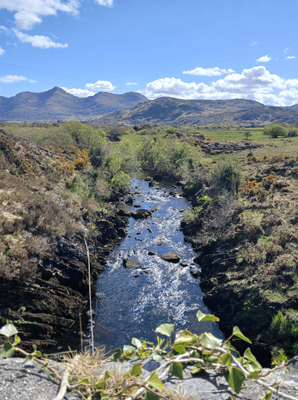
Caragh rivers near Glencar

Why are we losing Blue Dots?


RBMP 2018-2021
RBMP 2018-2021

Generally Blue Dot waters tend to be in the upper section of river catchments. For this reason, they are affected by some land use activities more than others. In addition to this Blue Dot waters are more commonly found along the Western seaboard and in mountainous areas e.g. Wicklow and Slieve Bloom Mountains. The dominant land uses in these areas are Forestry, Agriculture and Peat extraction and low density one off housing.

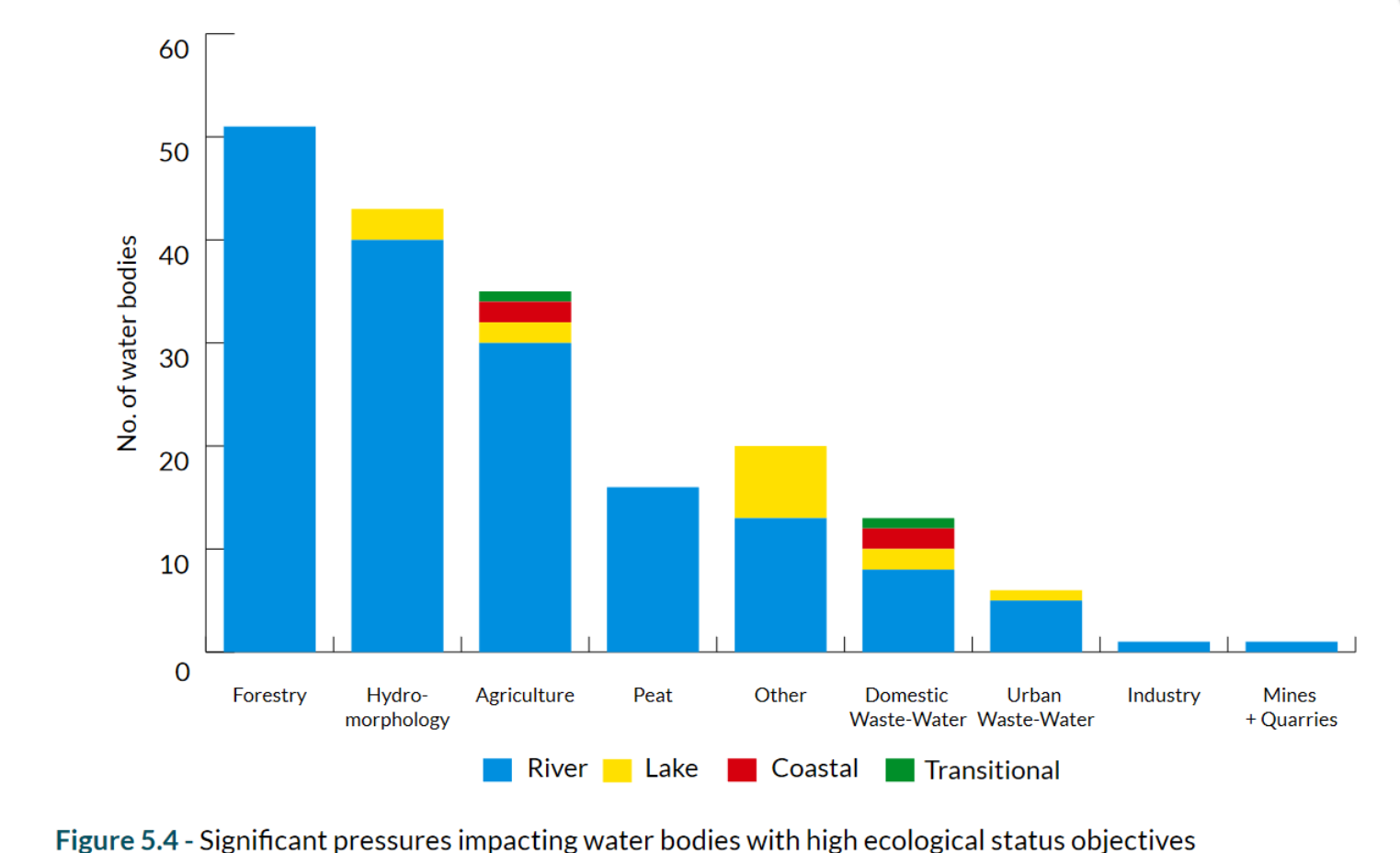
The profile of pressures that impact on our Blue Dots is slightly different to the pressures impacting on our Good Status water bodies. While agriculture is the most significant pressure on our good status waters, forestry is the most significant pressure on our Blue Dot waters. Forestry is a pressure on 51 (40%) of our Blue Dot waters, followed by hydromorphology in 43 (34%) water bodies, agriculture in 35 (28%) water bodies, peat extraction or disturbances in 16 (13%) water bodies and domestic waste-water in 13 (10%).

Activities that impact on our Blue Dot waterbodies in order the number of waters that are affected:

  1. Forestry
  2. Hydromorphology
  3. Agriculture
  4. Peat
  5. Other
  6. Domestic WWTP
  7. Urban WWTP
  8. Industry
  9. Mines and Quarries

The Blue Dots of Iveragh


The Blue Dot Catchments Programme, in collaboration with Kerry County Council, has launched an awareness campaign called ‘The Blue Dots of Iveragh’.

Watch our short documentary to learn more about the Blue Dot waterbodies found on this unique peninsula in Kerry, their importance for the local community and the joint effort required to protect and restore these vital waterways.

Visit Iveragh

The Blue Dots of Mayo


Download the Mayo Blue Dots Booklet

The Blue Dots of Connemara


Download the Connemara Blue Dots Booklet